Your media history, kept personal.
Record the books, films, shows, games, music, and podcasts you experience. Add your own ratings and notes, then revisit your history in one private library on your phone.
Meant to be useful later, not performative now.
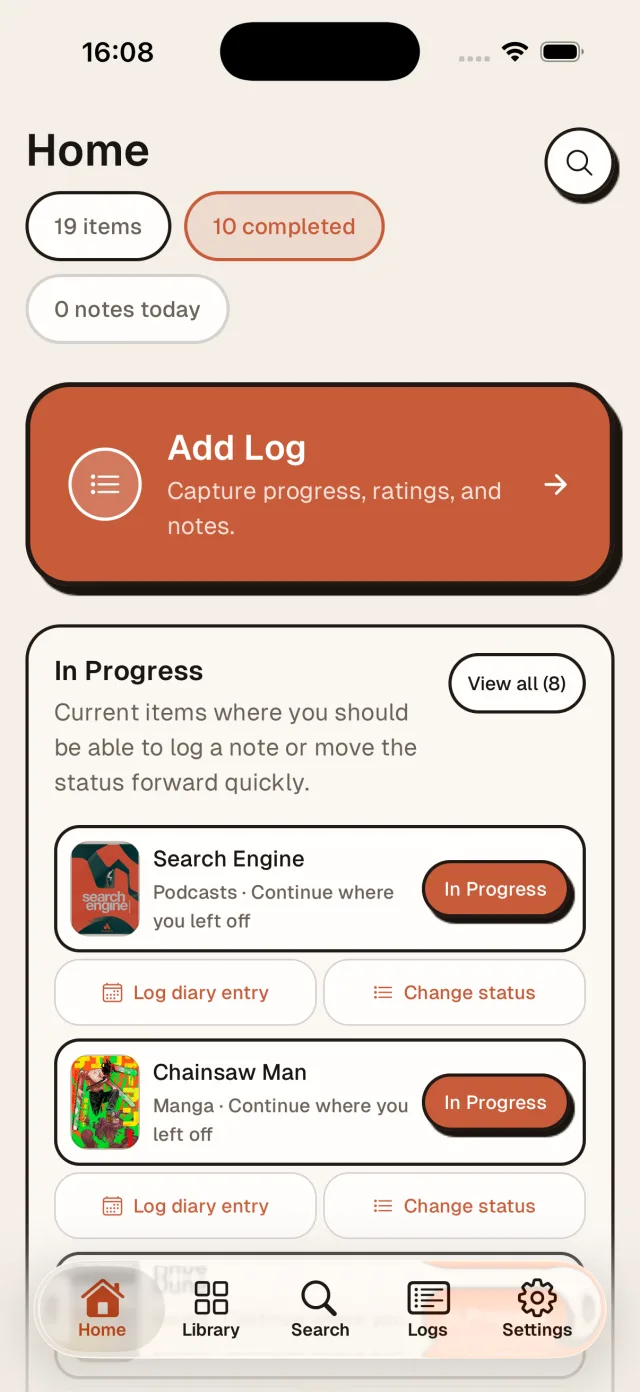
So you don't forget
Remember what you experienced
Keep a personal record of the books you read, films and shows you watch, games you play, and music or podcasts you listen to.
One history across your media
Books, films, shows, games, albums, and podcasts live together in one personal library.
Keep your own reaction
Add a private rating, review, or diary note to remember what you thought about an item.
Everything in one place
A movie and a game look different in the details, but they're both part of the same personal history. That's the point.
Add it. Log it. Leave a note.
Yore keeps the routine straightforward: add something to your library, record your own activity, and write a private note if you want one.
The thing you're tracking
Add a book, film, show, game, album, podcast, or another supported kind of media to your library.
What you actually did with it
Keep a personal record of the media you watched, read, played, or listened to.
A note tied to a date
Add your own review or reflection, linked to the media item so the thought stays with your private history.
How it looks
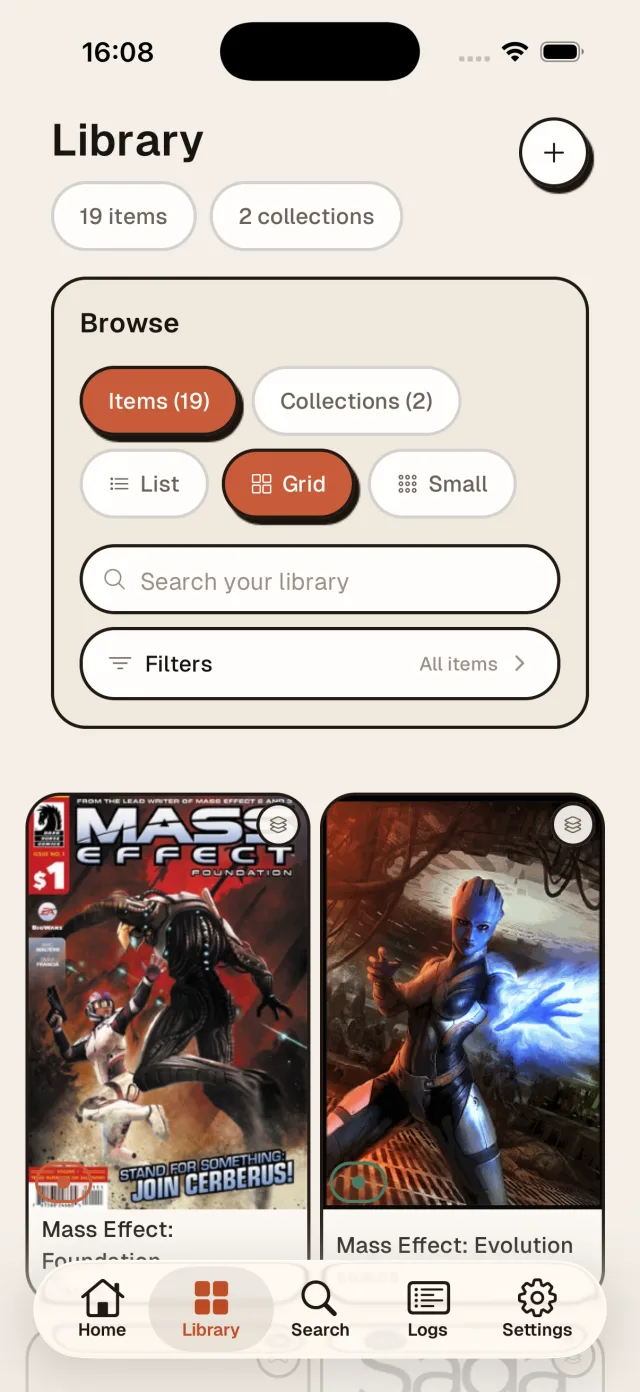
Your library
Everything you're tracking in one list. Browse by category, filter by status, or switch to a grid if you prefer covers over rows.
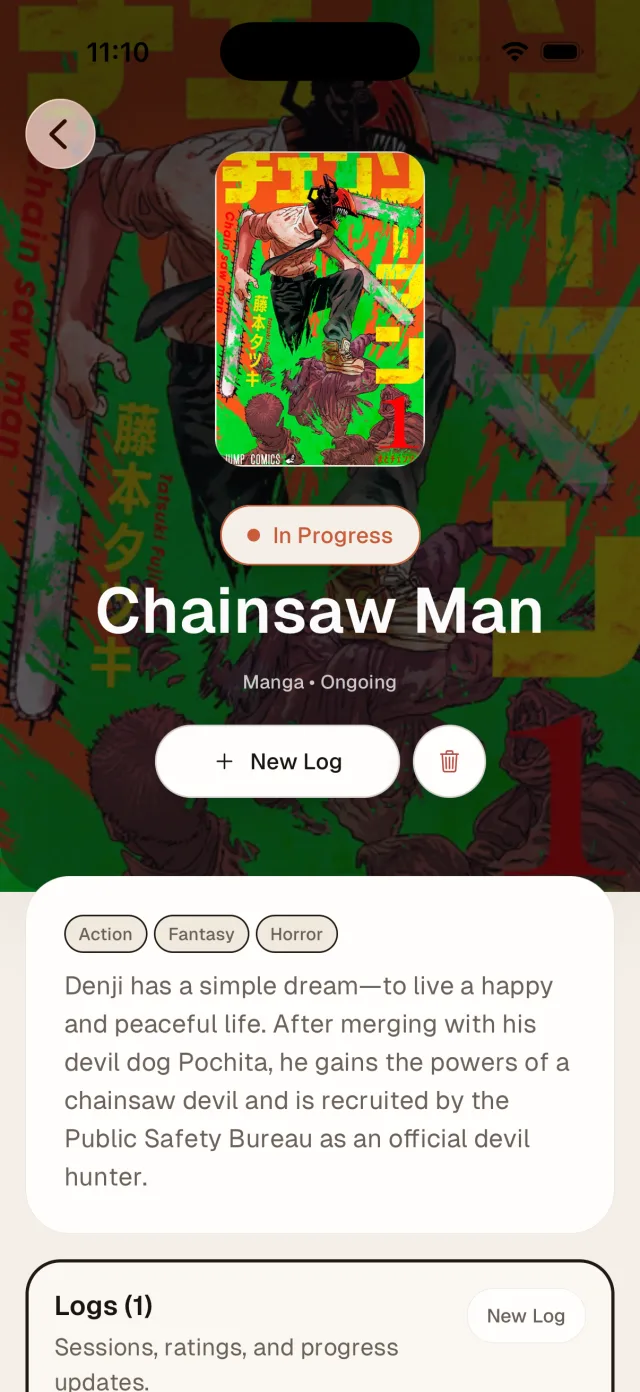
Item detail & logs
Tap anything in your library to see its full detail: status, ratings, and a history of every time you logged it. Add a new log right from here.
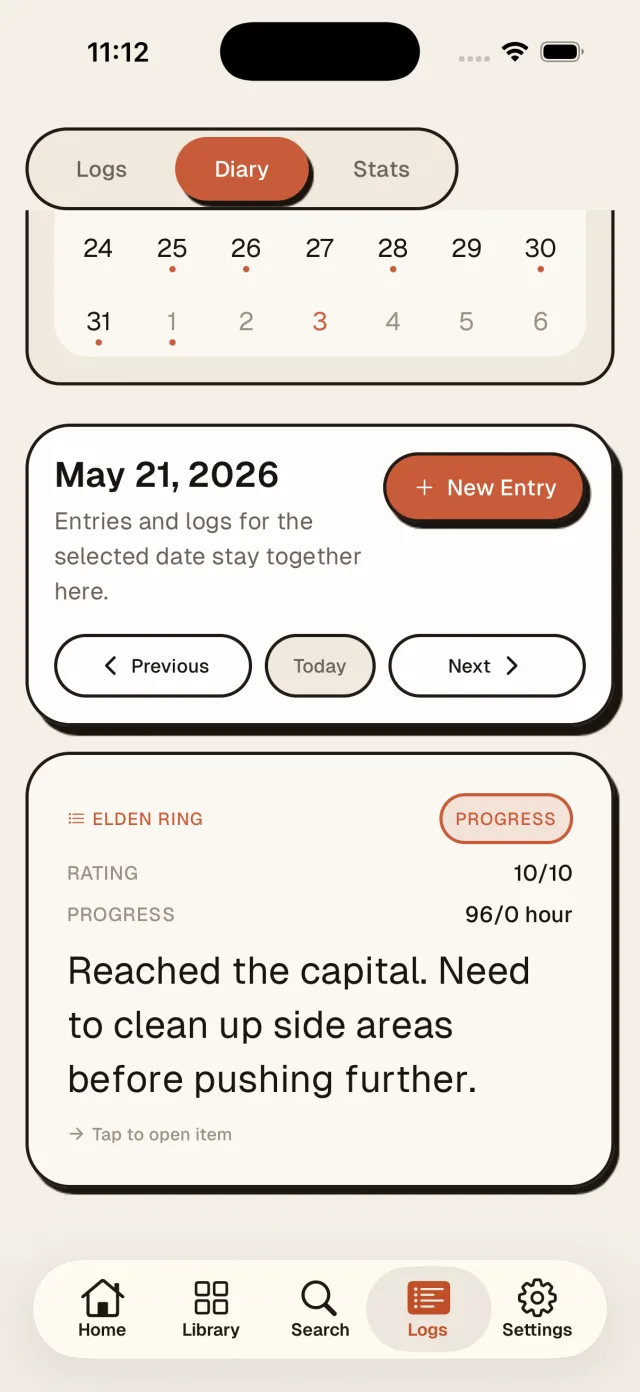
Diary
A 7/10 doesn't tell you much a year later. A note does. The diary view groups entries and logs by date, so you can see what you were doing and thinking at the time.
It stays on your phone
Local by default
Your library lives on your device and works without an account or connection. Optional iCloud sync is available when you choose to enable it.
Metadata is optional
Yore can pull in details from TVmaze, Jikan, Open Library, and others — but that data just becomes part of your local library. You can also skip it and add things manually.
No social layer needed
It's a personal record. Its value comes from what you put in, not from sharing it with anyone.
A personal log, by design
Not a social app
No followers, no public profile, no pressure to turn what you watch into content.
No discovery or release alerts
Yore keeps a record of your media life. It does not recommend what to watch next or notify you about new releases.
Simple media logging
Yore is for noting the titles you experience and what you thought of them, without episode-by-episode tracking or a social feed.
What it is
Yore is a simple, private media log for iPhone. Record books, films, shows, games, music, podcasts, and more; add personal ratings, reviews, or notes to your own history.
Your library and notes are stored on your device by default. No account is required; optional iCloud sync is available when you enable it.
Start with up to 5 items free. A one-time Full Access purchase removes the library limit; there is no subscription.
Yore, Sequel, and Sofa: different tracking styles
| Dimension | Yore | Sequel | Sofa |
|---|---|---|---|
| Tracking style | A simple personal log across media, with private ratings and notes | Completion and episode tracking, wishlists, and release reminders | Choose tracking modes, including progress tracking and Logbook stats |
| Personal context | Private ratings, reviews, and diary notes stay with your own library | Ratings, notes, and collection tools, with optional Trakt sync | Logbook and progress options, with Family Sharing |
| Best fit | People who want a quiet, private record of what they experienced | People who want release information and more detailed progress tools | People who want configurable progress tracking and stats |
Read the full comparisons: Yore vs Sequel · Yore vs Sofa.
Common questions
What is Yore for?
Yore is a simple, private media log for books, films, shows, games, music, podcasts, and more. Keep your own ratings and notes with your personal history.
How is Yore different from a simple watchlist?
A watchlist is for what you might try next. Yore is a personal log of media you have experienced, with optional ratings and private notes attached to your library.
Why is Yore local-first?
So it works without an account, and your data doesn't disappear if the service goes away. Your library is yours.
Who is Yore not for?
Yore is not for people looking for a social feed, public reviews, automatic episode-by-episode tracking, or release notifications. It is a private record for your own ratings and notes.
Does Yore track every TV episode or send release alerts?
No. Yore lets you log the media you experience and keep your own ratings and notes. It does not automatically check off episodes or send release alerts.
Is Yore an alternative to Sequel or Sofa?
Yore keeps a simpler personal history of what you experienced, with private ratings and notes. Sequel and Sofa offer more detailed progress tracking and additional tracking tools.
Can Yore track books, movies, and games in one place?
Yes. Yore keeps movies, TV, anime, books, manga, games, music, podcasts, board games, and comics in one personal library.
Can I keep a private book and movie log offline?
Yes. Yore's core library works offline and is stored locally. It covers books and movies along with other media, without a required account, public profile, or social feed.
Does Yore require an API key to fetch media metadata?
No. Optional metadata import from sources like TVmaze, Jikan, Open Library, iTunes, and Wikidata works with zero configuration; items can also always be added manually.
What media types does Yore support?
Yore supports Movies, TV Shows, Anime, Books, Manga, Video Games, Board Games, Music Albums, Podcasts, and Comics in one personal library.
Does Yore require API keys or accounts?
No account or API key is needed for Yore's core library or optional metadata lookups. The optional RetroAchievements integration requires its own account and API key.
Can I import or export my media logs?
Yes. Yore includes import and export tools for keeping a portable copy of your media library and logs.
That's the whole idea.
A local record of what you watched, read, played, and listened to — personal, private, and useful later.